


Laboratory Autoclave Features: What to Look For
Choosing a laboratory autoclave is about matching features to the loads you actually run. A unit that handles liquids, glassware, porous goods, and biohazardous waste needs more than a heater and a chamber: it needs controlled cooling, effective air and moisture removal, reliable drying, load-aware temperature measurement, and a control system that documents every cycle. This guide explains the features that matter, what each one does, and when it justifies the cost — so you can compare units against your workload rather than a spec sheet. It also covers the practical side of owning one: choosing a form factor, preparing the room's utilities, and the maintenance and calibration that keep those features performing.
For load-specific guidance, see Sterilizing Solids and Hollows and the Liquid Sterilization guide; for containment-grade units, see BSL Autoclaves for Biosafety.
Fast and Super-Fast Cooling
Cooling dominates turnaround for liquid loads, because the same heat capacity that slows come-up also slows cool-down. Two features address it:
- Fast cooling circulates cooling through the chamber jacket while holding counter-pressure in the chamber, reducing cooling time by up to about 75% versus ambient cooling. The counter-pressure is essential — it keeps the liquid below its boiling point while heat is removed, preventing boil-over.
- Super-fast cooling adds fan-assisted air circulation around the containers for faster, more uniform heat extraction, reducing cooling time by up to about 90%.
These are two distinct capabilities; fast cooling alone is roughly 75%, not 90%. If you process liquids in volume, cooling speed is often the single biggest driver of daily throughput. See the Liquid Sterilization guide for how cooling fits the liquid cycle.
Efficient Air and Moisture Removal
For porous and hollow loads, trapped air is the main cause of sterilization failure. A vacuum pump performs fractionated pre-vacuum pulses that evacuate more than 99% of the air from the chamber and load before steam admission, allowing steam to penetrate lumens and porous packs.
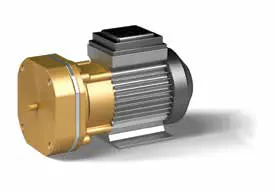
The same vacuum capability supports moisture removal after the holding phase, which is the basis of active drying (below). Air removal must be verified for pre-vacuum cycles; the relevant tests are covered in Sterilizing Solids and Hollows and in process challenge devices, Bowie-Dick & Helix tests.
Efficient Heating
How an autoclave generates steam affects cycle speed and steam quality. Units with an integrated steam generator produce steam on demand and reach temperature quickly without a building steam supply, which suits most standalone labs. Consistent, good-quality saturated steam matters as much as raw speed: wet or superheated steam undermines sterilization regardless of gauge readings. The underlying temperature–pressure relationship is explained in autoclave saturated steam temperature and pressure.
Active Drying and Complete Drying of the Load
Wet loads are a sterility risk: moisture wicks contaminants through porous wraps and leaves residue on glassware. Active drying uses a post-cycle vacuum to lower the boiling point so residual water flashes to vapor and is evacuated, drying wrapped and porous loads far more effectively than passive cooling. Complete drying extends this with additional vacuum-and-heat stages for dense or heavily wrapped loads that need to come out reliably dry. If your work involves wrapped goods or porous materials, drying capability is not optional — inadequate drying is a leading cause of wet packs, discussed in troubleshooting sterilization failures.
Biohazard and Waste Sterilization
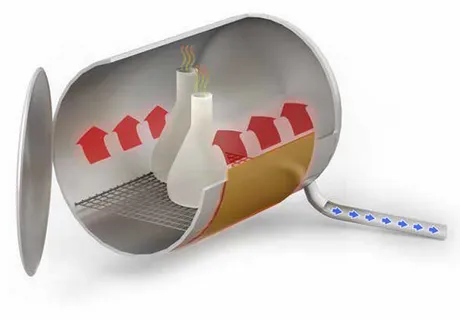
Labs that decontaminate biohazardous waste need an autoclave that contains aerosols generated during the cycle. A biohazard waste system routes chamber exhaust through a HEPA filter — which captures 99.97% of particles at 0.3 µm — so that air leaving the chamber is filtered rather than vented directly. This protects staff handling infectious cultures, diagnostic samples, and other potentially infectious materials. For full containment-grade requirements (bioshield framing, effluent decontamination, pass-through installation), see BSL Autoclaves for Biosafety.
Load-Temperature Probes
For liquids and other slow loads, timing the cycle from chamber temperature under-processes the load. Flexible load probes (PT100 sensors) sit inside a reference container so the holding phase is timed from the load's actual temperature. Some lab autoclaves include only a single load probe; a dual-probe configuration adds redundancy and cross-checking, so a single probe fault does not compromise the cycle. Dual probes also support F₀ calculation for heat-sensitive media, covered in the Liquid Sterilization guide.
Control System, Documentation, and Compliance
In regulated environments the control system is a feature, not an afterthought. Look for:
- Validated, traceable records. Software that automatically logs each cycle's parameters supports compliance with FDA 21 CFR Part 11 (electronic records and signatures) and good laboratory practice (GLP) documentation.
- On-board cycle storage. The ability to store many cycle programs (on the order of a couple hundred) covers diverse lab workloads without reprogramming.
- Documentation output. A built-in printer or digital export produces the GLP-compliant cycle record many labs require for audit.
- Clear operator interface. A multi-color display and guided cycle selection reduce operator error.
Cycle records also feed periodic requalification; see autoclave validation: IQ/OQ/PQ.
Choosing a Form Factor: Benchtop, Vertical, or Freestanding
Lab autoclaves come in three broad form factors. Most of the features above are available in all three, so the choice depends less on features than on bench and floor space, the size of your largest load, how many cycles you run each day, and the utilities the room can supply.
| Form factor | Loading | Space and utilities | Best for | Trade-offs |
|---|---|---|---|---|
| Benchtop lab autoclaves | Front-loading; some compact models load from the top | Sits on a sturdy bench; usually self-contained, with a built-in water reservoir | Small labs, point-of-use sterilization, modest daily volumes | Smallest chambers; tall flasks and full waste bags may not fit |
| Vertical (top-loading) lab autoclaves | From the top, with baskets lowered into the chamber | Floor-standing on a compact footprint; typically needs a dedicated electrical circuit, water supply, and drain | Media and liquid batches, waste bags, and tall glassware in mid-size labs | Lifting heavy baskets in and out takes effort and reach; cannot be loaded from a cart |
| Freestanding / large-capacity lab autoclaves | Front-loading horizontal chamber, often with loading carts; available as double-door pass-through | Largest footprint; dedicated electrical, water, and drain connections, and sometimes building steam | High throughput, large or mixed loads, core facilities, and containment labs | Highest installation demands; site preparation and qualification take longer |
How to Size the Chamber
- Start from the largest item, not the average load. The tallest flask, the widest rack, or a full waste bag must fit with space left around it for steam to circulate.
- Count cycles, not just litres. Liquid cycles are long because of heat-up and cooling, so a chamber that looks big enough can still become a bottleneck if it completes only a few liquid cycles per shift. Fast or super-fast cooling (above) changes that calculation.
- Consider separating load types. Liquids and porous goods usually run on different cycles. A lab with heavy demand for both may be better served by two smaller units than one large one, which also keeps sterilization running while one unit is down for maintenance.
- Check the room before the catalogue. A larger unit often brings stricter utility requirements, covered in the next section.
For a deeper treatment of chamber types and classes, see types of autoclave sterilizers.
Installation & Utility Requirements
A lab autoclave is a pressure vessel connected to power, water, and drainage, so the room has to be ready before the unit arrives. The manufacturer's installation manual is the governing document; the table below lists what to confirm with your facilities team in advance. Correct utility connections are also the first thing verified during installation qualification (IQ).
| Requirement | What to confirm | Why it matters |
|---|---|---|
| Electrical supply | Voltage, phase, frequency, and breaker rating match the unit's rating plate; a dedicated circuit for larger units | Many small benchtop units run on a single-phase supply, while larger vertical and freestanding units often need three-phase power. An undersized supply causes slow heat-up and nuisance trips. |
| Feed water | Water used to make steam meets the manufacturer's quality specification, typically distilled, deionized, or reverse-osmosis water | Minerals and chlorides scale the steam generator, corrode the chamber, and leave residue on loads. Poor feed water also degrades steam quality. |
| Cooling water | A cold-water supply at the required pressure, where the vacuum pump or cooling system uses water | Water-cooled systems consume water on every cycle, a running cost worth estimating before installation. |
| Drainage | A floor drain or trapped connection that tolerates hot discharge, and any local limit on discharge temperature | Condensate and exhaust water leave the unit hot. Some units cool their discharge before release; others need a heat-tolerant drain. |
| Ventilation and heat load | Room ventilation sized for the heat the unit releases, with exhaust capture near the door for large units | Steam and heat escape each time the door opens, raising room temperature and humidity. |
| Space and floor loading | Bench or floor strength, clearance for the door swing or top lid, and side or rear access for service | Plan for the weight of the unit plus water and a full load, not the shipping weight. Technicians need room to reach pumps and valves. |
| Building steam (large units) | Supply pressure and steam quality, including dryness and non-condensable gases, if the unit uses house steam instead of an integrated generator | Wet or contaminated house steam causes wet loads and failed tests, however well the autoclave itself performs; see why saturated steam quality matters. |
Containment labs add two requirements. Liquid leaving a BSL-3 or BSL-4 autoclave may have to be decontaminated before it reaches the building drain, and a unit installed through a containment wall needs a sealed penetration. Both are covered in effluent decontamination and wall sealing for BSL autoclaves.
Maintenance, Calibration & Routine Testing
Every feature in this guide depends on parts that wear. Door gaskets compress, vacuum pumps lose capacity, sensors drift, and filters load up — the gasket, safety valve, and sensors described in the main components of an autoclave all need routine attention. A regular schedule keeps the autoclave performing as it did when it was qualified. Follow the manufacturer's maintenance schedule first; the table shows the typical shape of an operator-level routine.
| Frequency | Operator tasks |
|---|---|
| Daily | Wipe the door gasket and sealing surface and check for cracks or flattening; clean the chamber drain strainer; check the water reservoir level; review the previous cycle records; if you run pre-vacuum cycles for porous loads, run an air-removal test before the first load |
| Weekly | Clean the chamber, trays, and racks with a cleaner the manufacturer approves (chlorine-based and abrasive products damage stainless steel); drain and refill the water reservoir on units that have one |
| Periodically, per manufacturer | Vacuum leak test where the unit supports it; inspect or replace the HEPA filter on biohazard units; test the safety valve; preventive maintenance by a qualified technician |
| Annually, or as your quality system requires | Calibrate temperature and pressure sensors, including load probes; pressure-vessel inspection where local regulations require it |
The air-removal test for pre-vacuum cycles is the Bowie-Dick test, described in process challenge devices, Bowie-Dick & Helix tests.
Why Calibration Matters
The autoclave times every holding phase from its temperature and pressure readings, so a drifted sensor affects every load without any visible warning. A chamber sensor that reads high ends exposure before the load has received its full lethality; a load probe that reads low over-processes heat-sensitive media. Calibration compares each sensor with a traceable reference and adjusts or replaces it when it falls outside tolerance. Load probes deserve particular care in labs that rely on liquid cycles and F₀ control. If a reading looks suspect between calibrations, check it against a calibrated reference probe, as described in diagnosing a cycle that won't reach temperature.
Routine Monitoring
Maintenance keeps the machine sound; monitoring proves that each load was processed. Chemical indicators on every load, and biological indicators at the interval your biosafety or quality program sets, confirm that sterilizing conditions actually reached the load — see how chemical and biological indicators verify each cycle. Keep maintenance, calibration, and test records alongside cycle records; together they show an auditor that the unit was in a qualified state for every load it released.
Industry Applications
The same features serve different sectors, with emphasis shifting by application:
- Research and clinical labs prioritize load variety, biohazard filtration, and documentation.
- Pharmaceutical labs emphasize F₀ control, 21 CFR Part 11 records, and validated cycles for media and equipment.
- Food and beverage labs rely on fast liquid cooling for media turnaround, F₀ control to protect heat-sensitive media, and isothermal processing for agar — sterilizing the media and consumables used in quality-control testing of products such as beverages and packaged foods.
These are application emphases, not different machines: the underlying features are the same ones described above.
Safety and Productivity Features
- Door interlocks and pressure safety prevent opening under pressure and manage over-pressure conditions.
- Counter-pressure cooling protects against boil-over and container rupture during liquid cooling.
- Self-diagnostics and alarms flag faults before they spoil a load.
- Water and energy efficiency in cooling systems is an increasing procurement factor for high-throughput labs.
General high-pressure safety design is covered in autoclave safety features.
Standards
- ISO 17665 — moist-heat sterilization validation and routine control, the basis for cycle qualification.
- EN 285 (large sterilizers) vs EN 13060 (small sterilizers) — determines which test regime applies to a given unit; benchtop units fall under EN 13060, large freestanding chambers under EN 285.
- FDA 21 CFR Part 11 — electronic records and signatures, relevant to control-system documentation.
- IEC 61010-2-040 — safety requirements for sterilizers and washer-disinfectors, relevant to electrical installation and safe operation.
- Pressure-equipment rules, such as the EU Pressure Equipment Directive or the ASME Boiler and Pressure Vessel Code — govern pressure-vessel design; local regulations may also require periodic inspection in service.
- AAMI guidance — best-practice reference for steam sterilization and monitoring.
FAQ
What features matter most in a laboratory autoclave?
The features that matter depend on your loads: fast and super-fast cooling for liquid throughput, vacuum-assisted air removal for porous and hollow loads, active drying for wrapped goods, load-temperature probes and F₀ control for heat-sensitive media, biohazard HEPA filtration for waste, and a 21 CFR Part 11-capable control system for regulated environments. Match the feature set to the work rather than the longest spec list.
What is the difference between fast cooling and super-fast cooling?
Fast cooling circulates cooling through the chamber jacket under counter-pressure and reduces cooling time by up to about 75% versus ambient cooling. Super-fast cooling adds fan-assisted air circulation around the containers for up to about 90% reduction. They are two distinct capabilities, and fast cooling alone is not 90%.
Why do some lab autoclaves have two temperature probes?
A second flexible load probe provides redundancy and cross-checking, so a single probe fault does not compromise cycle timing. Dual probes also support F₀ calculation for heat-sensitive liquid media. Some units ship with a single load probe, which is adequate for simpler loads but offers no backup.
Do I need a 21 CFR Part 11 control system?
You need it if your lab keeps electronic cycle records for regulated work — pharmaceutical, clinical, or GLP environments. 21 CFR Part 11 support ensures records are traceable, tamper-evident, and audit-ready. Research labs without those requirements may not need it, though cycle logging is still good practice.
Which form factor should I choose?
Choose by space, the size of your largest load, and how many cycles you run each day. Benchtop units suit small labs and point-of-use work; vertical top-loading units suit media, liquid, and waste batches where floor space is limited; freestanding large-capacity units suit high throughput, cart loading, and pass-through containment installations. Size to the largest load you run regularly, not the average, and confirm the room's utilities before deciding.
What utilities does a laboratory autoclave need?
A laboratory autoclave needs an electrical supply that matches its rating — single-phase for many small benchtop units, often three-phase for larger ones — plus feed water of the quality the manufacturer specifies and a drain that tolerates hot discharge. Vertical and freestanding units may also need a cold-water supply for cooling and room ventilation to remove heat and steam. Large units can run on building steam instead of an integrated generator, provided the steam quality is adequate.
How often should a laboratory autoclave be calibrated?
Calibrate temperature and pressure sensors, including load probes, at the interval set by the manufacturer and your quality system — commonly once a year — and after any repair that affects a sensor or the controller. Between calibrations, a reading that disagrees with indicator results or a reference probe is a reason to check calibration early.
Conclusion
The right laboratory autoclave is the one whose features match your loads: cooling speed for liquids, vacuum air removal and drying for porous and hollow goods, load probes and F₀ for heat-sensitive media, HEPA filtration for biohazard waste, and a documented control system for regulated work. Once the unit is installed, a prepared site and a steady routine of maintenance, calibration, and monitoring keep those features performing as qualified. Use this guide to compare units against your actual workflow, then see Sterilizing Solids and Hollows, the Liquid Sterilization guide, and BSL Autoclaves for Biosafety for load-specific detail. Return to Laboratory Autoclave Guide for the section overview.