


Sterilization Methods: A Complete Overview
Sterilization methods eliminate every form of viable microorganism—bacteria, viruses, fungi, and bacterial spores—from a load to a sterility assurance level (SAL) of 10⁻⁶. No single method works for every device. Heat-sensitive electronics, lumened endoscopes, heat-stable surgical instruments, biohazardous waste, and injectable liquids each need a different approach, and the choice is governed by load characteristics, throughput, regulatory setting, and cost.
This page is a router. It introduces the major sterilization methods used in healthcare, laboratory, and industrial settings, then links to deeper articles for each one.
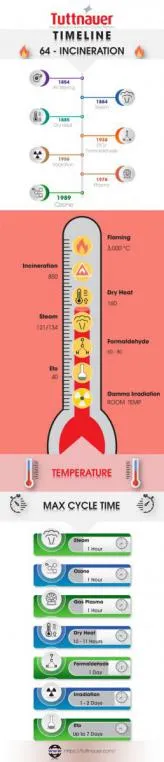
How Sterilization Methods Are Classified
Methods divide into two broad categories by killing agent:
- Heat-based methods — denature and oxidize microbial proteins and nucleic acids using thermal energy.
- Non-heat methods — kill or remove microorganisms with chemicals, gases, radiation, or physical separation.
The variables that drive method selection are:
| Variable | Why it matters |
|---|---|
| Heat sensitivity of the load | Eliminates steam and dry heat for plastics, electronics, optics |
| Moisture sensitivity | Rules out steam and LTSF for powders, oils, sealed electronics |
| Throughput needs | Steam (~30–60 min) is far faster than EtO (>14 hr) or gamma (batch) |
| Regulatory setting | Hospitals, CSSDs, pharma, and industrial manufacturers face different standards |
| Material compatibility | Cellulose absorbs H₂O₂; PVC absorbs EtO; certain polymers degrade under gamma |
Heat-Based Methods
Dry Heat Sterilization
Dry heat oxidizes microorganisms in a hot-air oven at 160–180 °C for 1–2 hours. It is the right choice for materials that steam damages or cannot penetrate—oils, powders, anhydrous greases, and certain glassware. Cycles are long, but dry heat does not corrode metal instruments. See dry heat sterilization.
Steam Sterilization
Saturated steam at 121–134 °C is the most widely used method in healthcare and laboratories. Moisture coagulates microbial proteins, and the volume change as steam condenses drives deep penetration into porous loads. Steam is fast, residue-free, and inexpensive—but it requires devices that tolerate heat and humidity. See steam sterilization and the Autoclave Sterilizers section for equipment-specific guidance.
Flaming and incineration are also heat-based but used only for special purposes—flaming for laboratory inoculating loops, incineration for biohazardous waste destruction.
Chemical and Gas Methods (Low Temperature)
Ethylene Oxide (EtO)
EtO gas alkylates microbial DNA and proteins at 25–55 °C. It penetrates long lumens and is widely used by medical device manufacturers, but the gas is carcinogenic, flammable, and requires aeration cycles up to 48 hours. See ethylene oxide (EtO) sterilization.
Hydrogen Peroxide (VHP / Plasma)
Vaporized hydrogen peroxide and H₂O₂ plasma sterilize at ~50–55 °C in cycles of 35–75 minutes, breaking down to water and oxygen with no toxic residuals. It is the dominant low-temperature method for endoscopes and heat-sensitive devices in modern CSSDs. See hydrogen peroxide plasma sterilization and the VHP H₂O₂ buyer's guide.
Ozone
Ozone (O₃) is generated in-situ from medical-grade oxygen and oxidizes microbial cell walls. It reverts to oxygen with no residuals, was FDA-cleared in 2003, and is gaining adoption as a safer alternative to EtO and formaldehyde. See ozone sterilization.
Low-Temperature Steam and Formaldehyde (LTSF)
Formaldehyde, mixed with steam at 60–80 °C, is used in some European countries for heat-sensitive devices. It is not FDA-cleared for US healthcare and is in decline due to carcinogenicity and tightening regulations. See formaldehyde sterilization.
Radiation
Gamma Irradiation
Gamma rays from Cobalt-60 break microbial DNA strands and ionize cellular components. Used industrially to sterilize disposables (syringes, gowns, sutures, allografts) inside their final packaging at SAL 10⁻⁶. See gamma irradiation sterilization.
Filtration (Physical Separation)
Filtration is the only sterilization method that separates rather than kills.
Liquid Filtration
A 0.22 µm membrane filter retains bacteria as a heat-sensitive solution passes through. Standard for vaccines, parenterals, culture media, and biopharmaceutical products that cannot be autoclaved. See liquid filtration sterilization.
Air Filtration (HEPA)
HEPA filters retain ≥99.97 % of 0.3 µm particles, used on autoclave biohazard exhaust lines and in BSL-3 / BSL-4 ventilation systems. See air filtration in sterilization.
How to Choose a Sterilization Method
| Load type | Heat sensitive | Throughput need | Typical setting | Recommended method |
|---|---|---|---|---|
| Stainless surgical instruments | No | High | Hospital CSSD | Steam (pre-vacuum) |
| Dental handpieces | No | High | Dental clinic | Steam (Class B) |
| Wrapped textile packs | No | Medium | Hospital CSSD | Steam (pre-vacuum) |
| Flexible endoscopes | Yes | Medium | Endoscopy unit | H₂O₂ plasma or EtO |
| Implantable devices | Varies | Low (manufacturer) | Industrial | Gamma or EtO |
| Powders and oils | No (but moisture-sensitive) | Low | Pharma / lab | Dry heat |
| Heat-sensitive injectables | Yes | Continuous | Pharma | Liquid filtration (0.22 µm) |
| Disposable PPE / sutures | Varies | High batch | Industrial | Gamma irradiation |
| Biohazardous waste | No | Variable | BSL lab / hospital | Steam + HEPA exhaust, or incineration |
FAQ
What is the most effective sterilization method?
Steam sterilization is the most effective method for heat- and moisture-tolerant loads because it is fast, achieves SAL 10⁻⁶ reliably, leaves no residue, and is the most validated process worldwide. For heat-sensitive devices, hydrogen peroxide plasma is the leading low-temperature method.
Which sterilization method is used in hospitals?
Hospitals primarily use steam sterilization in autoclaves for surgical instruments, dental tools, and textile packs. They use hydrogen peroxide plasma or EtO for endoscopes and other heat-sensitive devices, and HEPA filtration on biohazard exhaust.
What is the difference between sterilization and disinfection?
Sterilization eliminates all viable microorganisms including bacterial spores to SAL 10⁻⁶. Disinfection reduces microbial load on surfaces but does not necessarily kill spores. Sterilization is required for instruments that contact sterile tissue or the bloodstream.
Is gamma sterilization safe for the products being sterilized?
Gamma irradiation does not make products radioactive and leaves no chemical residue, but it can degrade certain polymers (PTFE, polypropylene with no stabilizers), discolor materials, and alter the properties of some pharmaceuticals. Material compatibility must be validated before specifying gamma.
Why is EtO still used despite its toxicity?
EtO penetrates long lumens, complex geometries, and packaged materials that other low-temperature methods cannot reach reliably, and is compatible with a very broad range of polymers. Roughly half of all medical devices in the US that need sterilization are sterilized with EtO, although the FDA has been actively pursuing alternatives.
Conclusion
There is no universal sterilization method. Heat-tolerant loads belong in steam; heat-sensitive devices belong in a low-temperature method matched to their geometry, materials, and regulatory setting; and packaged disposables at scale belong in gamma. Use this hub as a starting point and follow the links into each method-specific article for cycle parameters, validation requirements, and applicable standards.