


Gamma Irradiation Sterilization: How It Works and When to Use It
Gamma irradiation sterilization uses high-energy photons emitted by Cobalt-60 to ionize molecules in microbial cells, fragmenting DNA and producing reactive species that destroy any viable organism inside the load. It is a cold, dry process that penetrates packaged products, requires no chemical residues, and routinely sterilizes a major share of the world's disposable medical devices, surgical kits, allografts, and pharmaceutical packaging components at SAL 10⁻⁶.
This article explains the mechanism, the role of Cobalt-60, dose requirements, validation under ISO 11137, and how gamma compares to electron-beam and X-ray sterilization.
How Gamma Irradiation Works
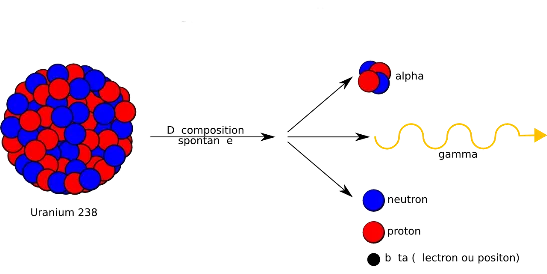
Gamma rays are short-wavelength electromagnetic radiation emitted from the nucleus of a radioactive atom as it decays. They are far more energetic than visible light or X-rays from medical imaging—each photon carries enough energy to ionize atoms it passes through.
When gamma photons traverse a microbial cell:
- They directly break covalent bonds in DNA (single- and double-strand breaks), proteins, and lipids.
- They ionize water molecules, generating hydroxyl radicals (•OH) and other reactive species that secondarily attack cellular components.
Damaged DNA cannot replicate, and the cell dies or is rendered incapable of reproduction. The process does not generate significant heat in the load (gamma is a "cold" sterilization method) and the products do not become radioactive — gamma photons interact with electrons, not nuclei.
Cobalt-60 and the Radiation Source
Industrial gamma sterilization uses Cobalt-60 (⁶⁰Co) almost exclusively. It is produced by neutron irradiation of stable Cobalt-59 in a nuclear reactor:
⁵⁹Co + n → ⁶⁰Co
⁶⁰Co decays with a half-life of 5.27 years, emitting two gamma photons (1.17 MeV and 1.33 MeV) per decay. The half-life is short enough to deliver high dose rates and long enough that a source can operate for decades with periodic replenishment.
A gamma irradiator stores the cobalt source in shielded racks (water pool or lead). Products on conveyor or pallet systems pass around the source for a calculated exposure time, receiving a validated dose. Source activity decreases over time and is offset by adding new cobalt pencils.
What Is Sterilized by Gamma Irradiation
Gamma is the dominant method for packaged single-use medical devices sterilized at industrial scale:
- Disposables: syringes, hypodermic needles, IV sets, gauze, surgical gowns, drapes, gloves, dressings, sutures, scalpels, surgical blades
- Implants and grafts: orthopedic devices, cardiovascular implants, bone grafts, tendons, ligaments, dura mater, heart valves, corneas, skin
- Diagnostic and lab products: culture plates, cell culture flasks, blood collection tubes
- Pharmaceutical components: raw materials, container/closure systems, certain finished products
- Consumer-adjacent applications: food (where regulated), cosmetics raw materials, cork
A large fraction of the world's disposable medical devices are sterilized by gamma or another form of radiation. The product is sterilized inside its final packaging at SAL 10⁻⁶, which eliminates post-sterilization contamination risk during handling and shipping.
Dose Levels and Validation
Sterilization dose for medical devices is established under ISO 11137 and is typically 15–35 kGy (kiloGray), with 25 kGy being the most common reference dose. The dose required depends on the bioburden on the product before sterilization—lower bioburden allows lower dose.
Two dose-setting approaches under ISO 11137-2:
| Method | How it works | Use case |
|---|---|---|
| Method 1 | Bioburden-based, uses standard distribution of resistance | Product with measured low bioburden |
| VDmax | Verifies a substantiated maximum dose | Most modern medical device manufacturing |
Dose mapping inside the load identifies minimum and maximum dose locations; the minimum must meet sterilization dose, the maximum must stay below the material's compatibility limit. Routine release uses dosimeters placed in defined locations on every load.
Key fact: Gamma irradiation achieves SAL 10⁻⁶ when the validated minimum sterilization dose is delivered to every part of the load, verified by dosimetry.
Advantages of Gamma Sterilization
- Deep penetration through dense, packaged products — sterilizes inside final packaging
- No residuals — no chemical contamination, no aeration required
- Continuous process — high throughput on conveyor systems, days/weeks of run time
- Cold process — no significant heating of the load, suitable for many heat-sensitive materials
- Excellent reproducibility — dose is the only critical parameter
- Insensitive to humidity and temperature of the load environment
- Long-shelf-life sterility — sealed package never re-opened after sterilization
Limitations and Disadvantages
- Material degradation: PTFE, polypropylene without stabilizers, certain elastomers, and some pharmaceuticals discolor or lose mechanical properties under typical doses. Material compatibility must be validated.
- High capital cost: A gamma facility costs tens of millions of dollars; only economic at industrial scale.
- Source replenishment: Cobalt-60 must be replenished every few years; supply is limited and tightly controlled (the global supply comes from a handful of reactors, primarily in Canada, Russia, and Argentina).
- Regulatory and security overhead: Radioactive source handling, transport, and facility security require dedicated programs.
- Worker safety: Robust shielding and access interlocks required; operator radiation exposure is closely monitored.
- Batch processing only — the load is transported to the irradiator; not on-site sterilization.
Gamma vs Electron Beam vs X-ray Sterilization
Three radiation methods compete in industrial sterilization. They share the underlying mechanism (ionizing radiation damages DNA and biomolecules) but differ in source, penetration, and dose rate.
| Factor | Gamma (⁶⁰Co) | Electron Beam (e-beam) | X-ray (bremsstrahlung) |
|---|---|---|---|
| Source | Cobalt-60 isotope | Linear accelerator (electrical) | Linear accelerator + tungsten target |
| Photon vs particle | Gamma photons | Electrons | X-ray photons |
| Penetration | Excellent (high density loads) | Limited (~5–10 cm depending on density) | Excellent (similar to gamma) |
| Dose rate | Slow (hours) | Very fast (seconds) | Moderate |
| Capital cost | High (source, building) | Moderate (no isotope) | Highest |
| Source dependence | ⁶⁰Co supply (geopolitical) | Electrical only | Electrical only |
| Material compatibility | Standard reference | Less polymer degradation due to fast dose | Similar to gamma |
| Suitability | Dense, packed products | Lower-density, flat products | High-throughput, dense loads |
Trend: X-ray sterilization is gaining adoption as a non-isotope alternative to gamma, particularly for facilities seeking to avoid Cobalt-60 supply and security concerns. E-beam dominates for thinner products and where higher throughput per unit footprint is needed.
Regulatory Standards
- ISO 11137-1 — Sterilization of health care products: Radiation. Requirements for development, validation, and routine control of a sterilization process for medical devices.
- ISO 11137-2 — Establishing the sterilization dose.
- ISO 11137-3 — Guidance on dosimetric aspects of development, validation, and routine control.
- ISO 13004 — Substantiation of selected sterilization doses.
- AAMI TIR29 — Guide for process control in radiation sterilization.
- IAEA Safety Standards — Radiation source security and transport.
FAQ
Does gamma sterilization make products radioactive?
No. Gamma photons interact with electrons, not atomic nuclei, so they do not induce radioactivity in the irradiated product. The sterilized item carries no residual radiation when removed from the irradiator.
What is the standard gamma sterilization dose?
A reference dose of 25 kGy is widely used for SAL 10⁻⁶, but the actual validated minimum dose depends on bioburden and is established under ISO 11137-2. Doses range from about 15 kGy to 35 kGy in routine medical device sterilization.
Why is Cobalt-60 used instead of other isotopes?
Cobalt-60 has the right combination of gamma energy (1.17 and 1.33 MeV per decay), half-life (5.27 years), and manufacturability in a nuclear reactor. Cesium-137 has a longer half-life but lower energy and is less practical for high-throughput sterilization.
Can gamma sterilize liquids?
Yes — gamma can sterilize aqueous and non-aqueous liquids, but radiolysis can alter pH, generate degradation products, and affect drug stability. Liquid pharmaceuticals are usually sterile-filtered through a 0.22 µm membrane instead, unless gamma compatibility has been validated.
Is gamma sterilization being replaced?
Gamma share is declining slightly in some regions as X-ray sterilization comes online and as a few products migrate to e-beam, both of which avoid Cobalt-60 supply concerns. For the foreseeable future, gamma remains a major industrial sterilization method for packaged single-use devices.
What materials are not compatible with gamma?
PTFE (Teflon), unstabilized polypropylene, acetal copolymer (POM), and some elastomers degrade or discolor at typical sterilization doses. Stabilized polypropylene formulations and most polyethylene, PVC, polystyrene, and polycarbonate grades tolerate gamma well. Always validate material compatibility.
Conclusion
Gamma irradiation is the workhorse for terminal sterilization of packaged single-use medical devices and allografts. It penetrates deeply, leaves no residue, requires no aeration, and validates cleanly under ISO 11137. Its limits are economic (industrial scale only), material compatibility (specific polymers degrade), and source supply (Cobalt-60 from a handful of reactors). For comparable industrial alternatives, see electron-beam and X-ray context, and for low-temperature in-hospital reprocessing, see hydrogen peroxide plasma or EtO.