


Hydrogen Peroxide Plasma Sterilization: Process and Applications
Hydrogen peroxide plasma sterilization uses vaporized H₂O₂ excited into the plasma state to oxidize microorganisms at ~50–55 °C. Cycles run 35–75 minutes, the byproducts are water and oxygen, and the load is dry and ready for immediate use. This is the dominant low-temperature method in modern hospital CSSDs for heat- and moisture-sensitive devices including flexible endoscopes, rigid scopes, electrocautery instruments, and many electronic surgical accessories.
This article focuses on the sterilization process itself — how the hydrogen peroxide plasma cycle works, what it can and cannot sterilize, and how it compares to other low-temperature methods. For equipment selection and buyer guidance for VHP sterilizers, see the dedicated VHP H₂O₂ low-temperature sterilizer buyer's guide.
How Hydrogen Peroxide Plasma Sterilization Works
Three distinct physical and chemical phenomena combine to produce sterilization:
1. Hydrogen Peroxide as an Oxidant
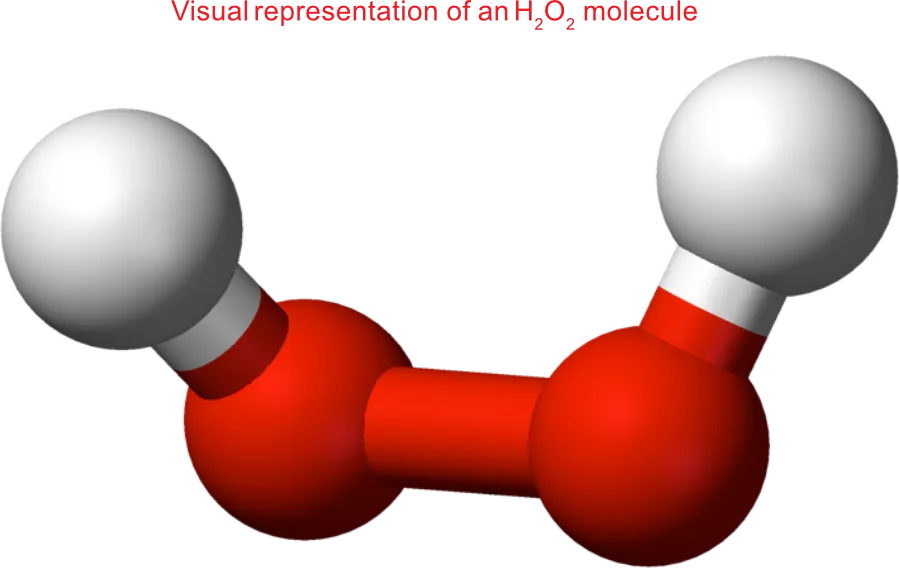
H₂O₂ is a strong oxidizer that decomposes into water and the highly reactive hydroxyl radical (•OH):
H₂O₂ → H₂O + ½ O₂
H₂O₂ → 2 •OH (under energetic input)
The hydroxyl radical attacks lipids, proteins, enzymes, and nucleic acids non-selectively, destroying microbial cell structure and metabolism.
2. The Plasma Phase
Plasma is the fourth state of matter — an ionized gas containing free electrons, positive ions, and electronically excited neutrals. When H₂O₂ vapor in the chamber is excited by an applied radio-frequency or microwave field, it fragments into hydroxyl radicals, hydroperoxyl radicals (HOO•), and other reactive species at far higher concentration than the parent vapor. These short-lived species are responsible for the rapid microbial kill.
3. Decomposition to Non-Toxic Byproducts
After the plasma phase, residual hydrogen peroxide is decomposed (or "cracked") into water vapor and oxygen — both safely vented. The load carries no chemical residue and requires no aeration, which is the central operational advantage over EtO.
Key fact: H₂O₂ plasma achieves a 6-log reduction (SAL 10⁻⁶) against bacteria, viruses, fungi, and bacterial spores at ~50–55 °C, without leaving toxic residuals.
The VHP Sterilization Cycle
A typical hydrogen peroxide cycle has three or four phases. Implementation varies by manufacturer (e.g., Sterrad, V-PRO, PlazMax), but the structure is similar.
Conditioning (Vacuum)
The chamber is evacuated to a deep vacuum to remove ambient air and water vapor and to allow uniform peroxide distribution at the next phase.
Sterilization (H₂O₂ Vaporization and Plasma)
Liquid H₂O₂ (typically 50–60 % concentration) is metered into a vaporizer and admitted to the chamber as vapor. After a hold for diffusion, an RF or microwave field generates the plasma phase. Most cycles include two passes of vaporization + plasma to ensure penetration to all surfaces.
Aeration / Cracking
Residual peroxide is decomposed catalytically or by extended plasma exposure into water and oxygen. The chamber is vented; the load comes out dry.
Air Admission and Door Release
Ambient air is admitted through a HEPA filter to break the vacuum, and the door is released.
| Parameter | Typical value |
|---|---|
| Temperature | 45–55 °C |
| H₂O₂ concentration | 50–60 % (liquid feed) |
| Cycle time | 35–75 minutes |
| Pressure | Sub-atmospheric (vacuum cycles) |
| Aeration | None (cracking integrated) |
| Load condition after cycle | Dry, immediate use |
What Is Sterilized with H₂O₂ Plasma
Hydrogen peroxide plasma is cleared for a wide range of heat- and moisture-sensitive reusable medical devices:
- Non-hollow loads: electrocautery instruments, dopplers, laser probes, defibrillator paddles, thermometers, ophthalmic lenses, harmonic scalpels and cables
- Single-channel hollow loads: laryngoscope blades, shaver handpieces, fiber-optic light cables, surgical power drills (within the cleared lumen length-to-diameter ratios)
- Endoscopes: rigid scopes routinely; flexible endoscopes if specifically cleared by the device IFU and the sterilizer's load list
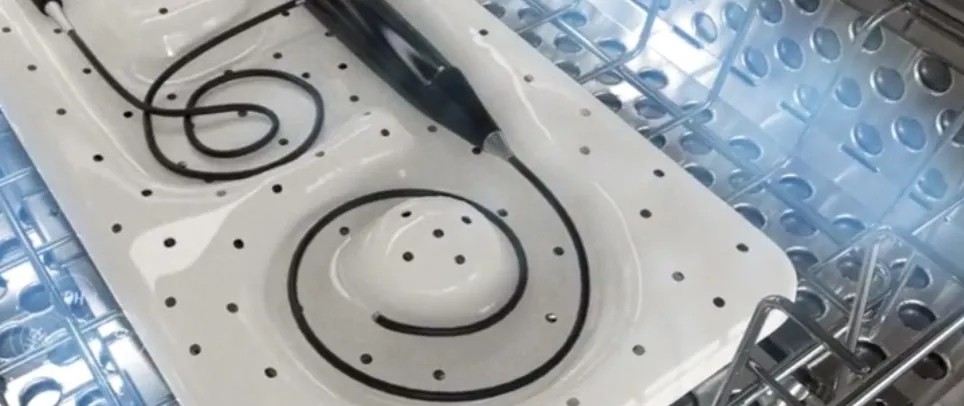
The sterilizer's cleared load specifications include lumen length-to-diameter limits (e.g., single-channel stainless steel lumens up to 400 mm long with internal diameter ≥1 mm, varying by system). Always verify against the device IFU and sterilizer documentation.
Advantages
- Short cycle time (35–75 min) compared with EtO (>14 h + days of aeration)
- No toxic residuals — load is ready for immediate use; no aeration required
- Low temperature (~50 °C) — safe for electronics, optics, polymers
- Dry process — no moisture damage; load comes out dry
- Environmentally clean — byproducts are water and oxygen
- No special facility requirements — no dedicated ventilation room, no gas cylinder logistics
- High operator safety profile — no exposure to toxic chemicals when used as designed
Limitations
- Cellulose incompatibility — paper, cotton, gauze, certain wraps, and other absorbent cellulose materials absorb peroxide and cannot be processed; must use synthetic Tyvek-style packaging
- Cannot sterilize liquids or powders
- Lumen restrictions — long, narrow, or branching lumens beyond the cleared geometry cannot be validated; some flexible endoscope channels remain a concern
- Strong absorbers (some implants, dense polymers) may absorb peroxide and prevent adequate sterilant concentration
- Smaller chamber sizes than industrial EtO; limits batch volume
- Cost per cycle typically higher than steam (consumable peroxide cassettes)
- Material compatibility must be validated per device — some adhesives, anodized coatings, and certain elastomers degrade under repeated exposure
H₂O₂ Plasma vs EtO vs Ozone
| Factor | H₂O₂ Plasma | EtO | Ozone |
|---|---|---|---|
| Sterilant | H₂O₂ vapor + plasma | Ethylene oxide gas | O₃ generated in-situ |
| Temperature | 45–55 °C | 25–55 °C | 30–35 °C |
| Cycle time | 35–75 min | >14 h + days aeration | ~4 h |
| Aeration required | None | 24–48+ hours | None |
| Carcinogen | No | Yes (Group 1) | No |
| Long-lumen capability | Limited (specific limits) | Excellent | Limited |
| Cellulose compatible | No | Yes | No |
| Liquid sterilization | No | No | No |
| Byproducts | Water + oxygen | EtO residuals | Oxygen |
| Facility requirements | Standard | Dedicated ventilation, gas-leak detection | Standard + ozone monitor |
For routine reprocessing of heat-sensitive surgical instruments and most rigid endoscopes, hydrogen peroxide plasma is the modern default. EtO retains its role where deep lumen penetration or cellulose compatibility is required. Ozone competes where supply simplicity and per-cycle cost outweigh cycle time and load list constraints.
Regulatory Standards
- ISO 14937 — General requirements for characterization of a sterilizing agent and the development, validation, and routine control of a sterilization process for medical devices. The framework under which novel low-temperature processes (including H₂O₂ vapor and plasma) are validated.
- ISO/TS 22421 — Sterilizers for medical purposes: Common requirements for sterilizers used to process medical devices in healthcare facilities.
- FDA 510(k) clearance — required for individual sterilizer systems and cycles in the US.
- AAMI ST58 — Chemical sterilization and high-level disinfection in healthcare facilities (covers low-temperature hydrogen peroxide processes).
- CDC Guideline for Disinfection and Sterilization in Healthcare Facilities — recognizes hydrogen peroxide vapor and plasma as acceptable low-temperature sterilization methods.
FAQ
Is hydrogen peroxide plasma sterilization the same as VHP?
VHP (vaporized hydrogen peroxide) is the broader category. "H₂O₂ plasma" specifically refers to systems that excite the vapor into the plasma phase to enhance reactivity (e.g., Sterrad). Some VHP systems sterilize using vapor only, without plasma generation. Both are low-temperature, residue-free oxidative methods.
How long does an H₂O₂ plasma cycle take?
Most cycles run 35–75 minutes, depending on chamber size, cleared cycle parameters, and load type. This is dramatically faster than EtO (>14 hours plus aeration) and slightly longer than steam (typically 30–60 min total).
Why can't H₂O₂ plasma sterilize cellulose materials?
Cellulose strongly absorbs hydrogen peroxide, which depletes the sterilant from the chamber atmosphere and prevents reaching adequate concentration on the load. Cotton wraps, paper, gauze, and other cellulose-based packaging must be replaced with synthetic alternatives (e.g., Tyvek pouches) for H₂O₂ plasma cycles.
What is the difference between H₂O₂ plasma and steam sterilization?
Steam uses moist heat at 121–134 °C; H₂O₂ plasma uses oxidative chemistry at 45–55 °C. Steam is faster, cheaper per cycle, and more broadly compatible — but is incompatible with heat-sensitive electronics, optics, and many polymers. Use H₂O₂ plasma when the device cannot tolerate steam.
Can H₂O₂ plasma sterilize flexible endoscopes?
Some flexible endoscopes are cleared for hydrogen peroxide processing, but channel length and diameter limits and the device IFU must be checked carefully. Many flexible endoscope channels exceed the cleared geometry of common H₂O₂ plasma systems; in those cases, EtO or high-level disinfection are alternatives.
Are there any operator safety concerns?
H₂O₂ plasma sterilizers are closed systems; under normal operation, operators are not exposed to peroxide. The OSHA PEL for hydrogen peroxide is 1 ppm (8-h TWA). Cassettes containing concentrated peroxide must be handled per manufacturer instructions; spill response procedures should be in place.
Conclusion
Hydrogen peroxide plasma is the dominant low-temperature sterilization method in modern healthcare for the right reason — it is fast, residue-free, low-temperature, and compatible with most heat-sensitive reusable medical devices. Its limits (cellulose, long lumens, liquids, powders) define a clear handoff to EtO, steam, or liquid filtration for those edge cases. For sterilizer selection, sizing, and procurement guidance, see the VHP H₂O₂ low-temperature sterilizer buyer's guide. Compare adjacent methods at the sterilization methods overview.